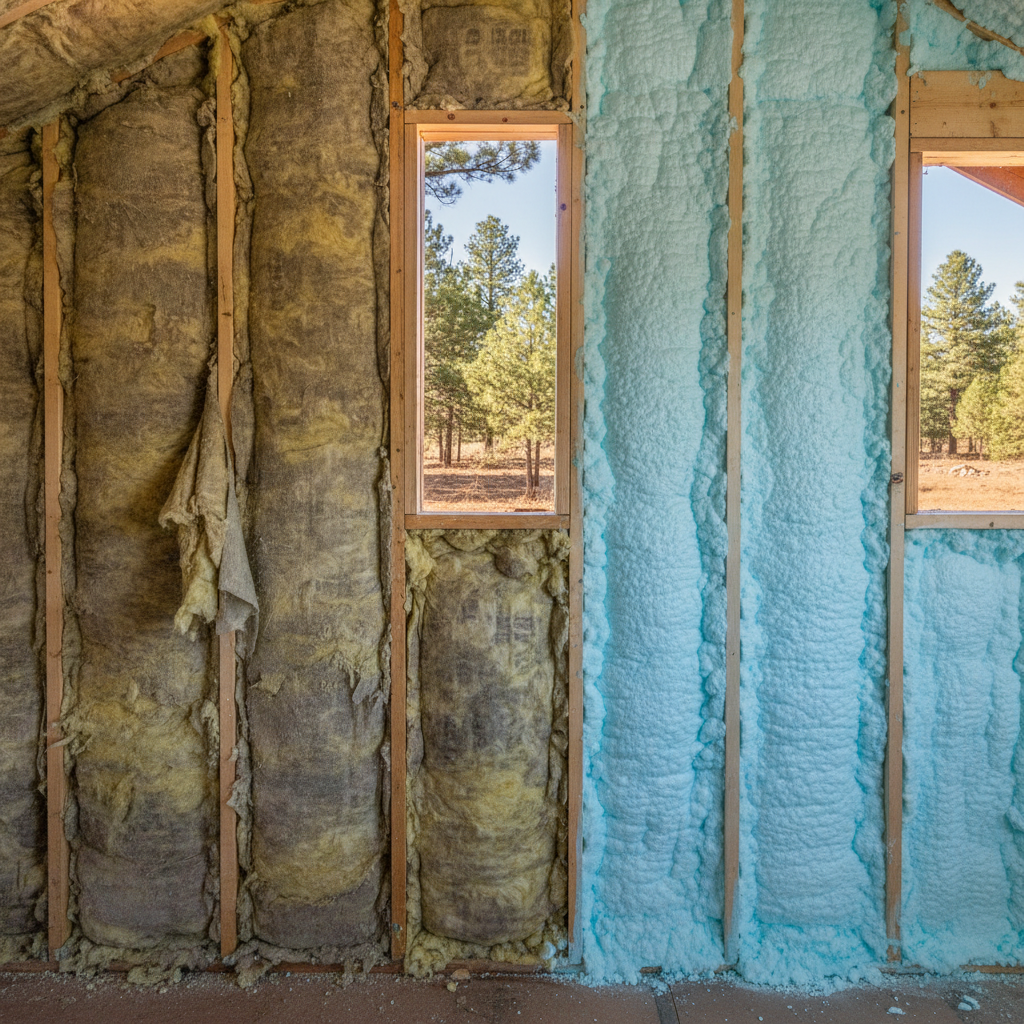
Houses in Flagstaff stay comfortable through a freezing winter based on how you insulate your cavities. When property owners call Flagstaff Spray Foam Insulation asking about open cell foam, they usually assume it is just one single product. Property owners generally have to choose between standard light-density open cell and newer high-density open cell options. Flagstaff Spray Foam Insulation breaks down how they actually compare when you factor in local freeze-thaw cycles and heavy winter snow loads.
The Cost Breakdown Up Front
Money matters first because nobody likes surprises on a home improvement invoice. Standard open cell is the budget-friendly workhorse. It expands quickly, fills every nook and cranny of your framing, and leaves you with plenty of cash left over. High-density open cell costs a bit more per board foot. Flagstaff Spray Foam Insulation notes that this is because it packs more material into that same space, giving it a firmer structure and better physical performance. If you are on a strict renovation budget, standard open cell looks attractive. But cheap upfront costs can sometimes cost you more down the road if the material does not match your specific structural needs.
Handling Flagstaff Weather and Durability
If you live out in Pine Del or up near Continental Country Club, you know the local weather is very harsh. The area gets heavy snow loads, sub-zero winter nights, and dry summer heat that bakes your roof deck. Standard open cell is great for sound dampening and thermal breaks, but it is softer and more sponge-like. High-density open cell pushes back. It has a higher compressive strength, meaning it adds actual rigidity to your wall assemblies and roof decks. If your framing moves a bit under heavy snow loads or high winds blowing off the peaks, high-density foam holds its ground much better without pulling away from the studs.
Maintenance, Moisture, and Appearance
Both types of open cell are vapor-permeable, which means they let moisture pass through rather than trapping it against your framing. This feature is very important in mountain climates where trapped moisture rots wood fast. However, appearance and maintenance look a bit different once installed. Standard open cell has a fluffy, textured look if left exposed in an attic or crawl space, and it can dent or compress if you bump into it while storing gear. High-density open cell cures much firmer. You can brush against it without leaving a thumbprint, and it looks cleaner and more uniform. Neither option requires ongoing maintenance once it is cured, but high-density gives you extra security if your attic space doubles as a storage zone for seasonal bins and ski gear.
My Recommendation for Local Homes
Property owners must pick the right option for their place. If you are insulating interior walls for sound control or doing a standard attic retrofit where nobody will ever touch the foam again, you can save your money and go with standard open cell. The material gets the job done right. But if you are insulating a cathedral ceiling, a tricky roof deck, or an area that needs extra structural reinforcement against heavy mountain snow, you should spend the extra money on high-density open cell. High-Density Open Cell Insulation performs better under stress, lasts longer without sagging, and stands up to the unique demands of living at seven thousand feet. For homes and businesses in Flagstaff, Flagstaff Spray Foam Insulation provides Spray Foam Insulation services.