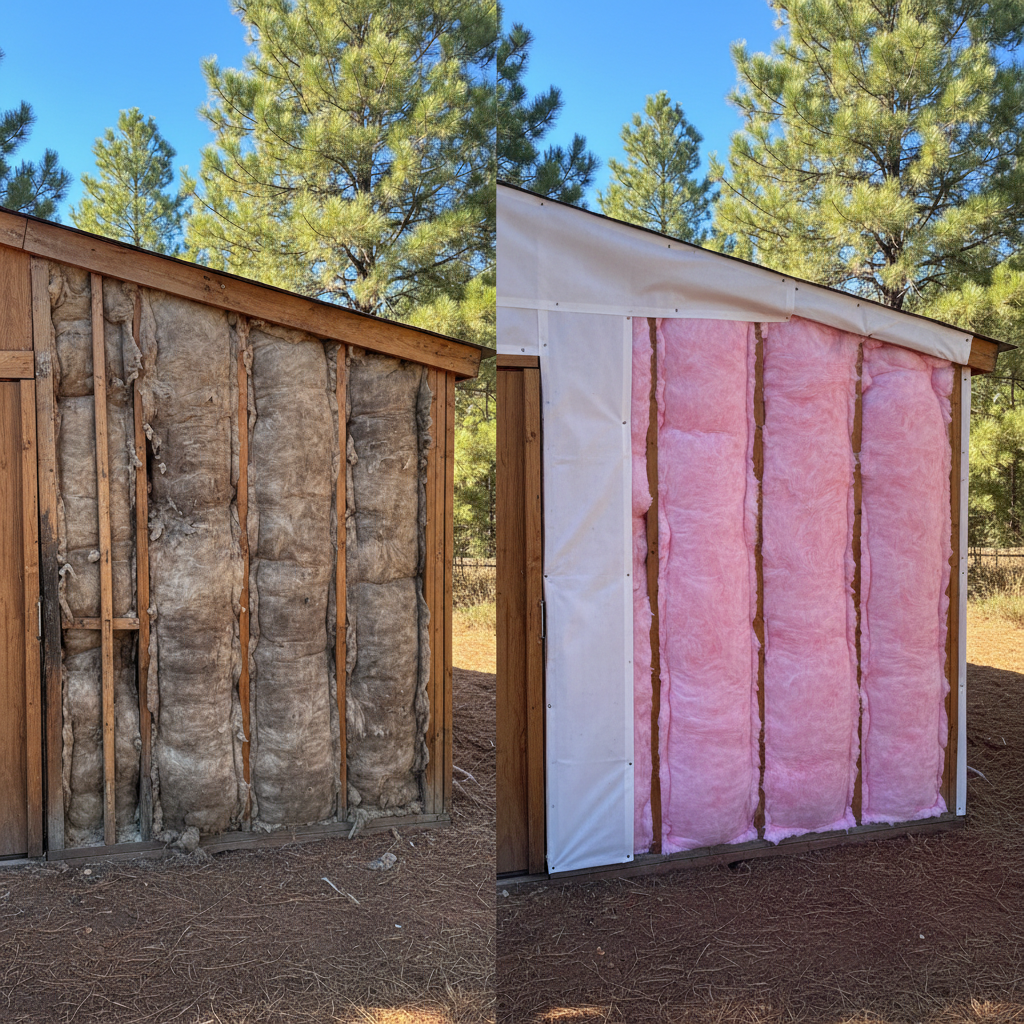
Alright, let's talk sheds. You've got one, or you're thinking about getting one, and you're probably wondering, "How do I keep this thing from turning into an icebox in winter or a sauna in summer?" That's a good question. Insulating your shed isn't just about making it comfortable; it also protects your tools, paint, and anything else you keep out there from our wild Flagstaff temperature swings.
When folks ask me about shed insulation, two main options usually come up: doing it yourself with foam board, or bringing in the pros for spray foam. Both have their place, but they're definitely not the same. Let's break them down.
DIY Foam Board: The Weekend Warrior's Choice
Foam board insulation, like rigid XPS or polyiso panels, is pretty common for sheds. You can grab it at any big box store, cut it with a utility knife, and fit it between your shed's studs. Sounds easy, right? For the most part, it is.
- Cost: This is usually the big selling point. You're just paying for the material, and your own labor is, well, free. It's often the cheapest option upfront, especially for smaller sheds.
- Durability: Once it's in place, it's fairly durable. You just need to be careful during installation not to break or crumble the edges. It won't sag or settle like some other materials might, which is a plus.
- Maintenance: Once it's up, there's not much to do. Just make sure it's sealed well to keep moisture from getting behind it; that can lead to mold or rot in your shed's framing, and nobody wants that.
- Appearance: It looks like, well, foam board. Most people will cover it with plywood or OSB for a finished look, which means more material cost and more work for you. If you leave it exposed, it's not exactly pretty, and it can get damaged pretty easily.
- Performance: It works okay. You'll get some R-value, but the biggest challenge is sealing all those seams. Every little gap where two boards meet, or where a board meets a stud, is a spot for air to leak in or out. And air leaks are heat leaks, plain and simple. This is especially true in older sheds where the framing might not be perfectly square, making it tough to get a tight fit.
Professional Spray Foam: The Premium Solution
Now, let's talk about spray foam. When I mention spray foam, I'm usually thinking about closed-cell spray foam for a shed. It's a two-part liquid that gets sprayed into your wall cavities, expands, and then hardens into a rigid, insulating barrier.
- Cost: No way around it, spray foam costs more upfront than DIY foam board. You're paying for specialized equipment, materials, and the expertise of a trained crew. But remember, you're also paying for a superior product and a top-notch installation.
- Durability: This stuff is incredibly durable. Once it cures, it's solid as a rock. It won't settle, sag, or degrade over time. It can even add structural rigidity to your shed's walls, which is a nice little bonus.
- Maintenance: Zero. Absolutely none. Once it's sprayed, it's done. It forms a seamless, monolithic barrier that won't need touching for the lifetime of your shed. It also acts as a vapor barrier, which is huge for preventing moisture issues in our dry but occasionally snowy climate.
- Appearance: It looks like a textured, hard foam. Most folks will still cover it with a finish material like plywood, but you don't have to. It's not unsightly if left exposed, and it's much more durable than exposed foam board.
- Performance: This is where spray foam really shines. Because it expands and fills every single nook and cranny, it creates an airtight seal. No gaps, no seams, no air leaks. This means a much higher effective R-value and vastly better temperature control. It's also a fantastic sound barrier, which can be nice if your shed is a workshop. For a shed in, say, Cheshire, where you might have some older, drafty construction, spray foam can make a massive difference.
So, What's My Recommendation for Flagstaff Sheds?
Look, if you're just storing a few gardening tools and don't care if it gets a little chilly or warm in there, then DIY foam board might be enough. It'll certainly be better than nothing.
But if you're planning on spending any real time in your shed, if you're storing valuable equipment, or if you want true comfort and efficiency, then professional spray foam is hands down the better option. The upfront cost is higher, yes, but the long-term benefits in terms of performance, durability, and not having to worry about it are worth it. You'll end up with a shed that stays consistently warmer in winter and cooler in summer, with no drafts or moisture issues.
Think of it this way: you wouldn't insulate your house with just taped-up foam boards, would you? Your shed might be smaller, but the principles of good insulation are the same. A well-insulated shed with Flagstaff Spray Foam Insulation will protect your investments and make your space far more usable year-round.