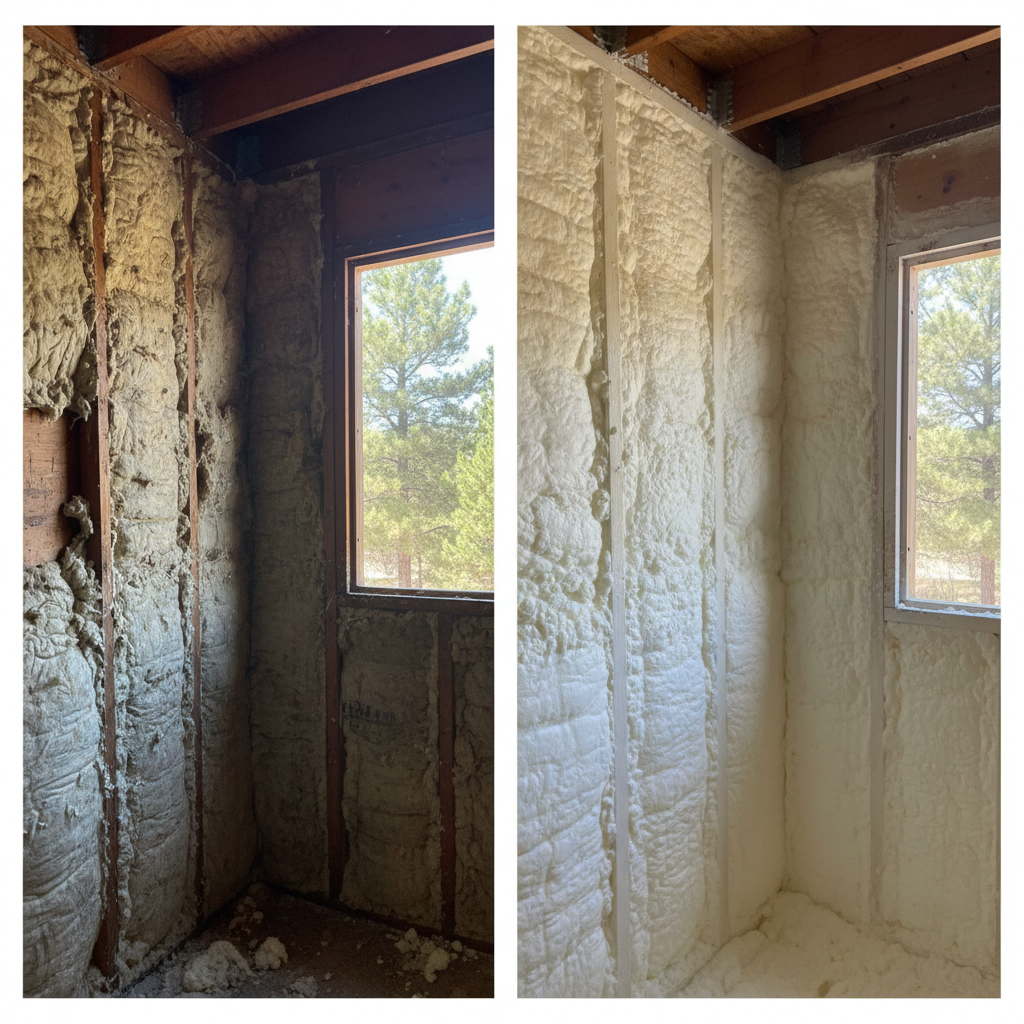
Alright, so you're thinking about open cell spray foam for your place here in Flagstaff. Good call. It's a fantastic product for making your home more comfortable and really cutting down those heating bills when winter gets serious, or keeping things cool once summer finally shows up. But here's where it can get a little tricky: there's more than one way to do this, or rather, more than one way to put in open cell foam.
You've probably heard terms like 'full cavity' or maybe 'hybrid' systems. What do those even mean? And more importantly, which one makes sense for your home, especially with our unique Flagstaff climate and the way our houses are built? Let's dig in.
Full Cavity Open Cell: The Whole Enchilada
This one's pretty simple. When I talk about a 'full cavity' install, I mean we're filling the entire stud bay – from one side of the stud right to the other – with open cell spray foam. So, if you've got a standard 2x4 wall, that's 3.5 inches of foam. A 2x6 wall? That's 5.5 inches. We make sure there are no air gaps, no tiny spots for drafts to sneak through. Not a single one.
The big win here is top-notch performance. You get the best R-value for the space, and you snag that amazing air-sealing quality spray foam is known for. It stops air movement cold, which, honestly, is a huge deal for how comfortable your home feels. Just think about those older houses in Sunnyside or Southside with their original framing; filling those cavities completely changes everything.
Cost-wise, it's usually going to be more expensive up front than a hybrid setup. You're simply using more material. But you're also getting insulation and air sealing that are truly top-tier. Durability? Once it's in, it's not going anywhere. It sticks to the studs and sheathing, forming one solid barrier. Maintenance? Zero. You don't ever touch it. And how it looks? Well, it's hidden behind your drywall, so you won't see it, but it fills the space perfectly before the drywall goes up.
Hybrid Open Cell Systems: A Different Angle
Now, the 'hybrid' system is where we mix open cell spray foam with another kind of insulation, usually fiberglass batts or sometimes even mineral wool. Here's how it works: we spray a thinner layer of open cell foam – maybe 1 to 2 inches – right against the exterior sheathing. This thin layer does the super important job of air sealing the wall cavity. It gets into all those little nooks and crannies, stopping air leaks dead.
After that thin layer of spray foam sets up, we then put traditional fiberglass or mineral wool batts into the rest of the wall cavity. So, if you have a 2x4 wall, you might get 1.5 inches of open cell foam, and then we'd add an R-13 fiberglass batt to fill the remaining 2 inches. That's how you get your R-value.
The main reason folks go for a hybrid system is often the cost. By using less spray foam, you can bring the total material cost down. You still get the crucial air-sealing benefits of the foam, which is arguably the most important part of spray foam insulation, but you hit your desired R-value with a more budget-friendly batt product. It's a pretty good compromise if you're trying to get great performance without totally blowing the bank.
Durability is good, though not quite as rock-solid as a full cavity. The foam is tough, and the batts are tough. Maintenance is still zero once it's installed. Appearance? Again, it's all behind the drywall, so you won't see it. The trick is making sure that thin layer of foam is applied perfectly to get that air seal just right.
Which One Should You Pick for Flagstaff?
This is the big question, isn't it? For most Flagstaff homes, especially with our wild temperature swings and the serious need for good insulation, I'm usually going to lean towards a full cavity open cell install when the budget allows. Why? A few reasons.
- Air Sealing is Everything: Our winds here, especially during those spring gusts, can really test a home's envelope. Full cavity foam creates an air barrier that's second to none, keeping drafts out and your conditioned air inside.
- Moisture Management: While open cell foam can breathe – meaning it can dry out if it happens to get wet – a full cavity install gives you a more consistent thermal envelope. In our dry climate, moisture usually isn't a huge worry from outside, but preventing any condensation inside the wall cavity is always a smart move.
- Consistent Performance: With full cavity, you're getting consistent R-value and air sealing across the whole wall. With hybrid, the quality of the batt installation after the foam can vary, and you don't quite get the same reduction in thermal bridging that a full foam fill provides.
- Sound Dampening: Open cell foam is also excellent for quieting things down. A full cavity fill will give you better noise reduction from outside traffic or between rooms, which can be really nice if you live near a busy street like Butler Ave.
Now, if money is really tight, a hybrid system is still a huge step up from just traditional batts. You're getting that crucial air seal, which is, honestly, half the battle. Just make sure your contractor is super careful with both the foam and the batt installation.
At Flagstaff Spray Foam Insulation, we've done both, and we've seen the results firsthand. For the best return on your investment in terms of long-term comfort and energy savings, especially in our climate, full cavity open cell foam is often the way to go. It's an investment that keeps paying you back with a more comfortable home and lower utility bills for years and years.
Don't hesitate to give us a call if you want to talk specifics about your house. Every home is a little different, and we can definitely help you figure out the best approach.