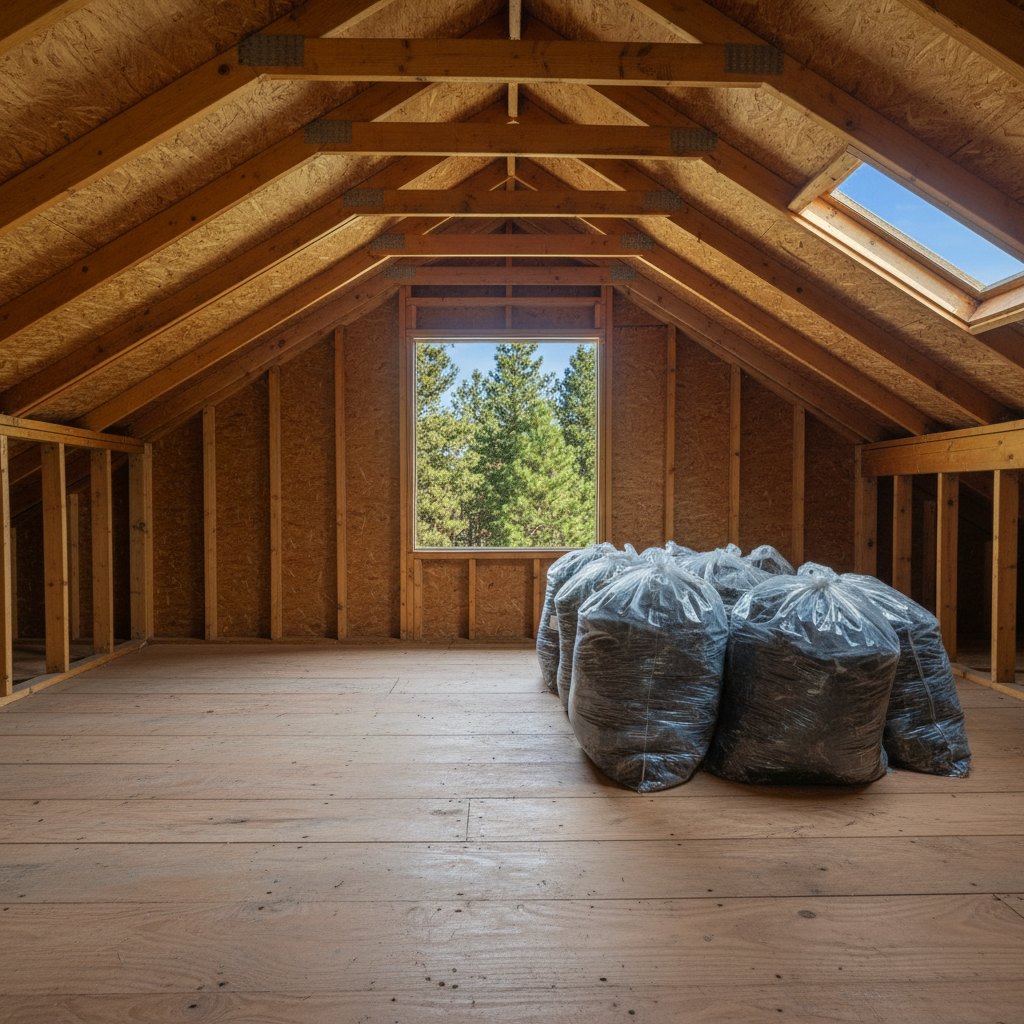
So, you're looking at getting rid of that old insulation. Maybe it's moldy, maybe it's been a squirrel hotel, or maybe you're just upgrading to something way more efficient like spray foam. Whatever the reason, insulation removal isn't a job you want to tackle yourself, and you're probably wondering what it's going to cost you.
I get it. Nobody likes surprises when it comes to home repairs. As a local contractor here at Flagstaff Spray Foam Insulation, I've seen my share of attics and crawl spaces, and I can tell you what factors really drive the price of getting that old stuff out.
What Makes Insulation Removal Cost What It Does?
It's not just a flat fee, unfortunately. A few key things will impact your final bill:
The Type of Insulation: This is a big one. Removing loose-fill fiberglass or cellulose is generally easier and cheaper than dense, heavy batt insulation, especially if it's been packed in tight for decades. Vermiculite, which often contains asbestos, is a whole different ballgame and requires specialized, certified hazardous material removal. If you suspect vermiculite, stop everything and get it tested. That's not a DIY project, and it's not something every insulation company can handle.
The Amount of Insulation: Simple math, right? More insulation means more time, more bags, and more disposal fees. An average 1,500 sq ft attic with 12 inches of loose-fill is a lot different than a 3,000 sq ft attic with 20 inches.
Accessibility: Is your attic a tight crawl space where I have to army-crawl to get anywhere? Or is it a wide-open space with plenty of headroom? The harder it is to get in, move around, and get the material out, the longer it takes, and the more it costs. Same goes for crawl spaces – some are easy, some are a nightmare to navigate, especially with our rocky Flagstaff soil sometimes making for uneven, tight access points.
Contamination: This is a major cost driver. If your insulation is full of rodent droppings, mold, or water damage, it's considered contaminated. That means extra precautions, specialized equipment (like HEPA vacuums), and often more expensive disposal. We're talking about health hazards here, so you don't want to cut corners.
Disposal Fees: We have to take this stuff to the dump, and they charge by weight. Contaminated material often has higher disposal costs too.
Typical Cost Ranges for Insulation Removal in Flagstaff
Alright, let's get down to some numbers. Keep in mind these are averages, and your specific situation could be higher or lower. This is based on what I've seen folks pay around here for a professional job, done right.
Uncontaminated Loose-Fill (Fiberglass/Cellulose) Removal: For an average 1,500 to 2,000 square foot attic, you're generally looking at anywhere from $1.50 to $3.00 per square foot. This includes vacuuming out the material, bagging it, and disposing of it. So, for a 1,500 sq ft attic, that's roughly $2,250 to $4,500.
Contaminated Loose-Fill Removal (Rodents/Mold): If there's significant contamination, the price jumps. Expect to pay anywhere from $3.00 to $6.00+ per square foot. This covers the extra safety gear, specialized cleaning, and sometimes sanitization. That 1,500 sq ft attic could now be $4,500 to $9,000+.
Batt Insulation Removal: This can be a bit more labor-intensive to pull out, especially if it's old and falling apart. Prices usually range from $1.75 to $3.50 per square foot, so a 1,500 sq ft attic would be around $2,625 to $5,250.
Crawl Space Removal: Because crawl spaces are often tighter and dirtier, removal can be a bit pricier per square foot than an attic. Expect $2.00 to $5.00 per square foot, depending on access and contamination levels.
Remember, these numbers don't include the cost of installing *new* insulation. This is just for getting the old stuff out.
What Should Be Included in Your Quote?
When you get a quote from Flagstaff Spray Foam Insulation, or any reputable company, make sure it clearly spells out:
Labor: The crew's time on site.
Equipment Rental: The big vacuums, hoses, and safety gear needed.
Materials: Bags, protective sheeting, etc.
Disposal Fees: The cost to take the old insulation to the landfill.
Cleanup: What they'll do to leave your home tidy.
Contamination Handling (if applicable): Specifics on how they'll deal with mold or biohazards, including any sanitization steps.
How to Avoid Overpaying
It's simple: get multiple quotes. Don't just go with the first guy who shows up. A good contractor will come out, inspect your attic or crawl space, and give you a detailed, written estimate. Ask questions. Understand what's included and what's not. If a price seems too good to be true, it probably is. You don't want a cheap job that leaves you with lingering issues or, worse, health problems.
Insulation removal is a dirty, often unpleasant job, but it's a crucial first step if you're upgrading your home's energy efficiency or dealing with a problem. Do it right, and you'll be set up for a healthier, more comfortable home for years to come.