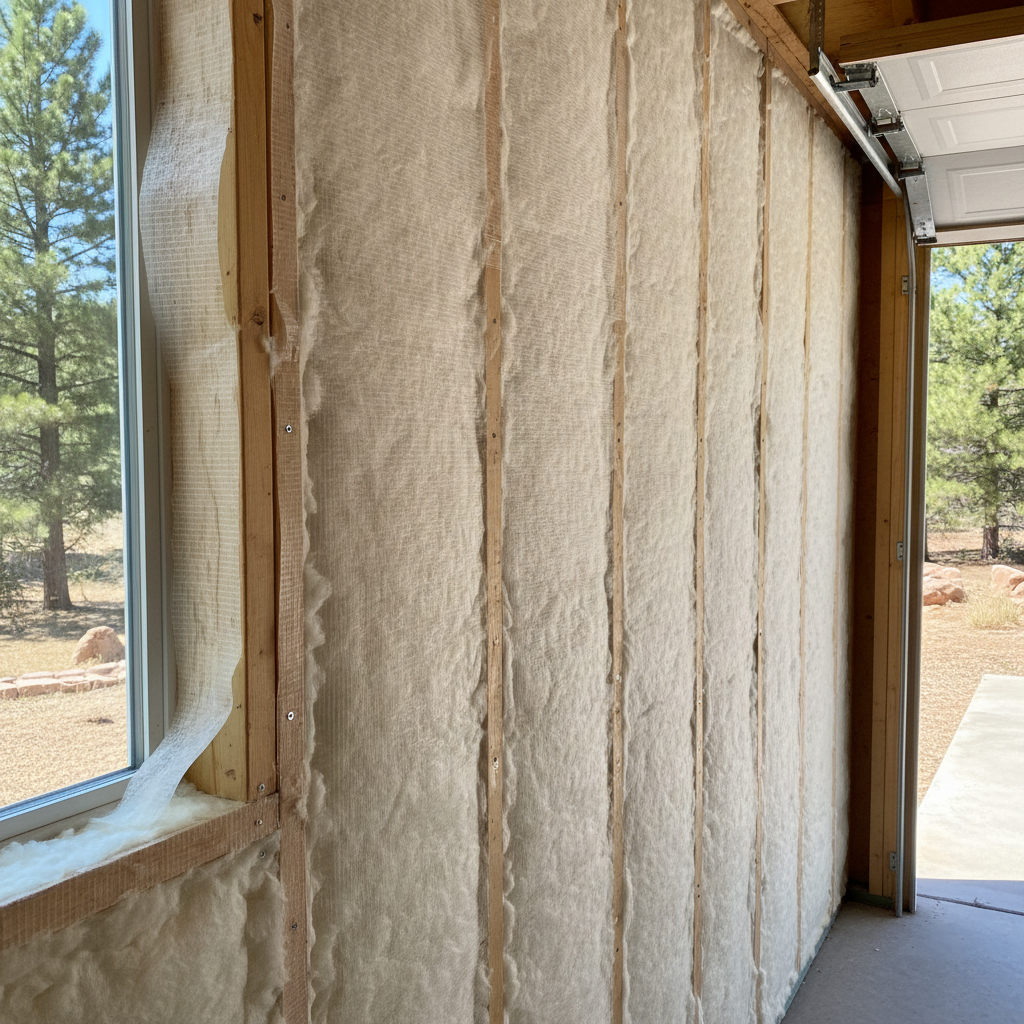
Alright, let's talk about garage insulation. I'm out here in Flagstaff every day, and I hear the same questions pop up again and again from homeowners looking to make their garages more comfortable or efficient. It's not just a storage space for most of us; it's a workshop, a gym, a laundry room, or even an extra living area. So, keeping it comfortable makes a big difference. I'm going to hit the most common questions I get and give you the straight scoop.
Do I really need to insulate my garage in Flagstaff?
You bet you do, especially here in Flagstaff. Our winters are no joke, and those summer afternoons can get pretty toasty too. An uninsulated garage is like a big thermal hole in your house. If it's attached, all that cold air in winter or hot air in summer just bleeds right into your living space, making your furnace or AC work overtime. Even if it's detached, insulating it makes it usable year-round. Think about those frosty mornings trying to start your car, or working on a project when your fingers are numb. Insulation helps keep the temperature more stable, protecting your car, tools, and anything else you store out there from extreme temperature swings. It's not just about comfort; it's about energy efficiency for your whole home and protecting your stuff.
What's the best type of insulation for a garage door?
This is a big one because the garage door is often the largest uninsulated surface. For existing garage doors, you're usually looking at rigid foam panels. These are typically made of expanded polystyrene (EPS) or polyisocyanurate (polyiso) and come in kits you can cut to fit each panel of your door. They're pretty effective for what they are, easy enough for a DIYer to install, and they don't add too much weight. Now, if you're getting a new door, you can buy insulated doors right off the bat. These are usually steel doors with foam sandwiched between the layers. They offer much better R-values than add-on kits and are definitely the way to go if you're replacing your door anyway. Don't forget the weather stripping around the edges either; insulation won't do much good if cold air is just whistling through the gaps.
Should I insulate the walls and ceiling of an attached garage?
Absolutely, especially if there's a living space above or next to the garage. Think about it: if your garage walls are shared with your kitchen or a bedroom, and they're not insulated, you're essentially heating or cooling the outside. Insulating those shared walls is a no-brainer for energy savings and comfort inside your house. For the ceiling, if you have a room above the garage, insulating that ceiling (which is the floor of the room above) is critical for preventing heat loss in winter and heat gain in summer. We often use spray foam for these areas because it seals all the little gaps and creates a really tight thermal envelope, which is super important with our big temperature swings here in Flagstaff. Even if it's just an attic space above, insulating that ceiling still helps regulate the garage temperature and prevents heat transfer to the rest of the house.
What about insulating the garage ceiling if there's an attic above it?
This is a slightly different scenario than a living space above. If your garage has an unconditioned attic space above it, you still want to insulate the ceiling of the garage. This prevents heat from escaping your garage into that attic space in winter, and keeps the heat from the attic from radiating down into your garage in summer. You're basically creating a thermal boundary between your garage and the outside world, even if that 'outside world' is just an unconditioned attic. Blown-in fiberglass or cellulose is a common choice here, but spray foam can also be used for a superior air seal and higher R-value. It really depends on what you're trying to achieve and your budget. Just make sure whatever you use, it's installed properly to avoid gaps.
Will insulating my garage help with noise reduction?
Yep, it sure will. Insulation isn't just about thermal performance; it's a pretty good sound dampener too. If you've got a noisy workshop, a band practicing in the garage, or just want to keep the sounds of your kids' basketball game from echoing through the house, insulation helps a lot. Materials like fiberglass batts or open-cell spray foam are particularly good at absorbing sound waves. So, if noise is a concern, whether it's keeping sound in or keeping sound out, adding insulation to your garage walls and ceiling will make a noticeable difference. It's a nice bonus benefit that often gets overlooked.
Can I insulate my garage myself, or should I hire a pro?
That depends on your comfort level and the type of insulation you're looking at. For simple projects like adding rigid foam panels to an existing garage door, or even installing fiberglass batts in an unfinished wall cavity, a handy homeowner can definitely tackle that. You'll need to measure carefully, cut accurately, and wear proper safety gear. But for more complex jobs, like insulating a finished garage, dealing with tricky framing, or especially if you're considering spray foam, I'd strongly recommend bringing in a professional. Spray foam, for instance, requires specialized equipment and training to apply correctly and safely. If it's not done right, you won't get the R-value you paid for, and you could even have issues with off-gassing or moisture. Here at Flagstaff Spray Foam Insulation, we've seen plenty of DIY attempts that ended up costing more to fix than if they'd just called us in the first place. For a proper, long-lasting job, especially with our unique climate and older homes around areas like the Southside, a pro is usually worth the investment.
What about insulating the garage floor?
This one's less common for existing garages unless you're doing a major renovation or building new. For new construction, insulating under the concrete slab is a great idea, especially if you plan on heating the garage or if you're in an area with really cold ground temperatures. You'd typically use rigid foam insulation laid directly on the ground before the vapor barrier and concrete pour. For an existing garage, insulating the floor is a much bigger undertaking, usually involving tearing up the concrete, which most homeowners aren't going to do just for insulation. If you're really worried about cold coming up from the floor in an existing garage, you might consider something like interlocking foam floor tiles or rubber mats, which offer a little bit of a thermal break and make standing on the concrete more comfortable, but it's not the same as true sub-slab insulation.