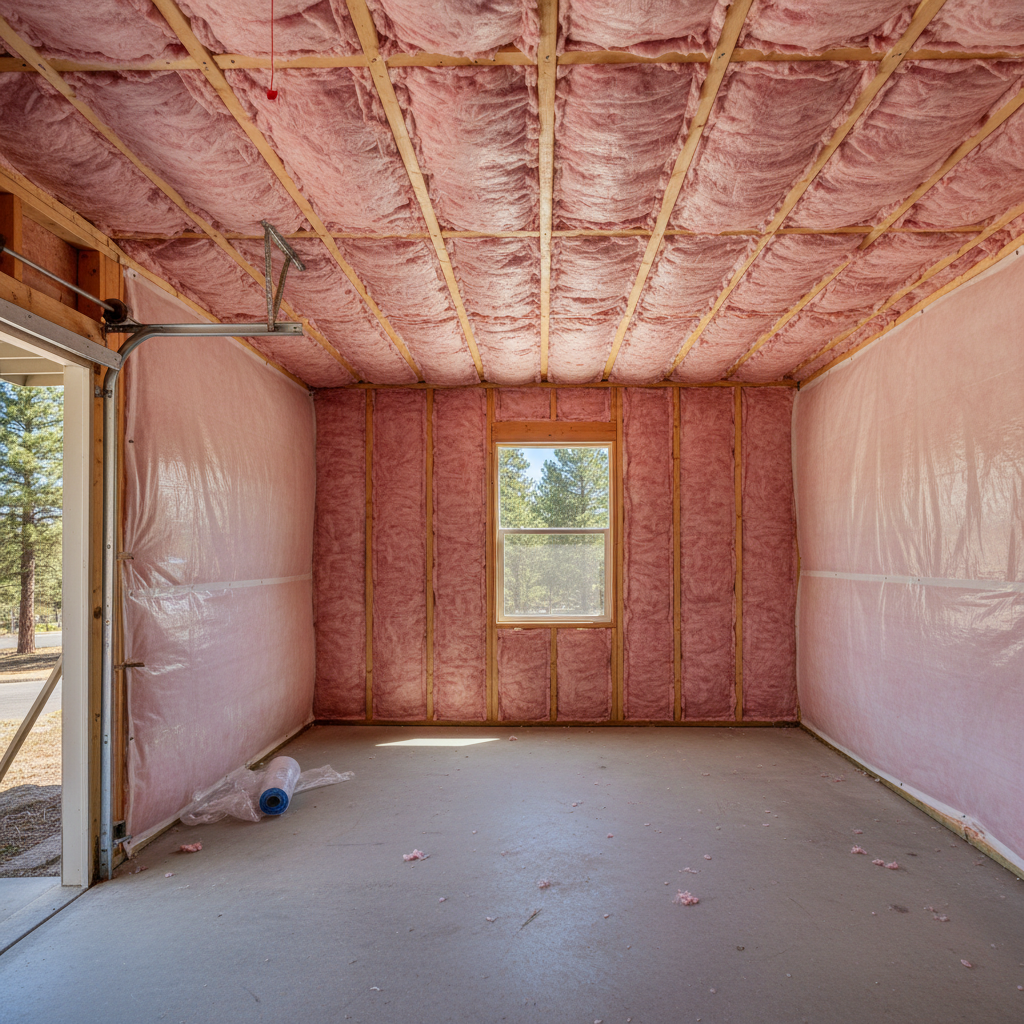
So, you're thinking about insulating your garage here in Flagstaff. Good call. Whether you're turning it into a workshop, a home gym, or just trying to keep the cold out of your main living space, a properly insulated garage really does make a difference. But what's that actually going to set you back? That's the big question, right? And I'm here to give you some real answers, not just a bunch of vague "it depends" talk.
What Makes Garage Insulation Prices Go Up or Down?
A few big things really move the needle on cost. It's not just about how many square feet you have, even though that's definitely part of it.
- Type of Insulation: This is probably the biggest factor. You've got choices, and each one comes with its own price tag and how well it performs.
- Garage Size and Layout: A standard two-car garage with a flat ceiling is usually easier and cheaper to insulate than, say, a tall, vaulted three-car garage with all sorts of weird angles. More surface area means more material and more hours for the crew.
- Existing Conditions: Is this a brand new build, or are we ripping out old, crummy insulation? Removal always adds to the cost, sometimes a lot, especially if there's mold or critters involved.
- Door and Window Insulation: Don't forget these crucial spots. An uninsulated garage door is basically like leaving a giant hole in your wall. Adding insulation to doors you already have, or upgrading to new, insulated ones, will factor into the total cost.
- Prep Work: Sometimes electrical wires or plumbing lines are in the way and need to be worked around or temporarily moved. That adds time and complexity to the job.
Typical Cost Ranges for Garage Insulation in Flagstaff
Alright, let's talk some actual numbers. Keep in mind these are just averages for our area — you know how fast prices can change — but this should give you a good idea of what to expect.
For a standard two-car garage (let's say it has about 400-500 square feet of wall/ceiling surface), here's what you might be looking at:
- Fiberglass Batts (R-13 to R-19): This is your most budget-friendly choice. For walls and ceilings, you're probably looking at $0.75 - $1.50 per square foot, installed. So, for that 400-500 sq ft garage, that's roughly $300 - $750. It does a decent job, but it won't be airtight.
- Blown-in Cellulose or Fiberglass: Great for attics or those enclosed wall cavities. If we're talking about blowing it into existing walls, it gets a bit more complicated. For new construction or open cavities, it's usually in the range of $1.00 - $2.00 per square foot, so $400 - $1,000 for the same size garage.
- Closed-Cell Spray Foam (R-6 to R-7 per inch): This is really the top-tier option for insulation, especially for garages. It creates an amazing air seal and even makes the structure stiffer. It costs more upfront, sure, but it pays off big time in energy savings and comfort. You're generally looking at $2.50 - $4.00 per square foot, maybe a little more for tricky spots. For our example garage, that's $1,000 - $2,000+. Yeah, it's a jump, but the performance is truly unmatched. Especially with our cold Flagstaff winters, that R-value and air seal make a huge difference, wouldn't you agree?
- Rigid Foam Boards: People often use these for garage doors or specific wall sections. Costs really vary depending on how thick they are and the type, but figure $1.50 - $3.00 per square foot for the material and installation.
And don't forget the garage door itself. Insulating an existing door can cost you $100 - $300 for a DIY kit, or $300 - $700+ if you have a pro do it or decide to get a new, pre-insulated door. It's a super important part of the whole system.
What Should a Good Quote Include?
When you get a quote from Flagstaff Spray Foam Insulation (or any other company, for that matter), make sure it's really detailed. It shouldn't just be one single number. Here's what you'll want to see:
- Material Type and R-Value: It should clearly say what they're using (e.g.,