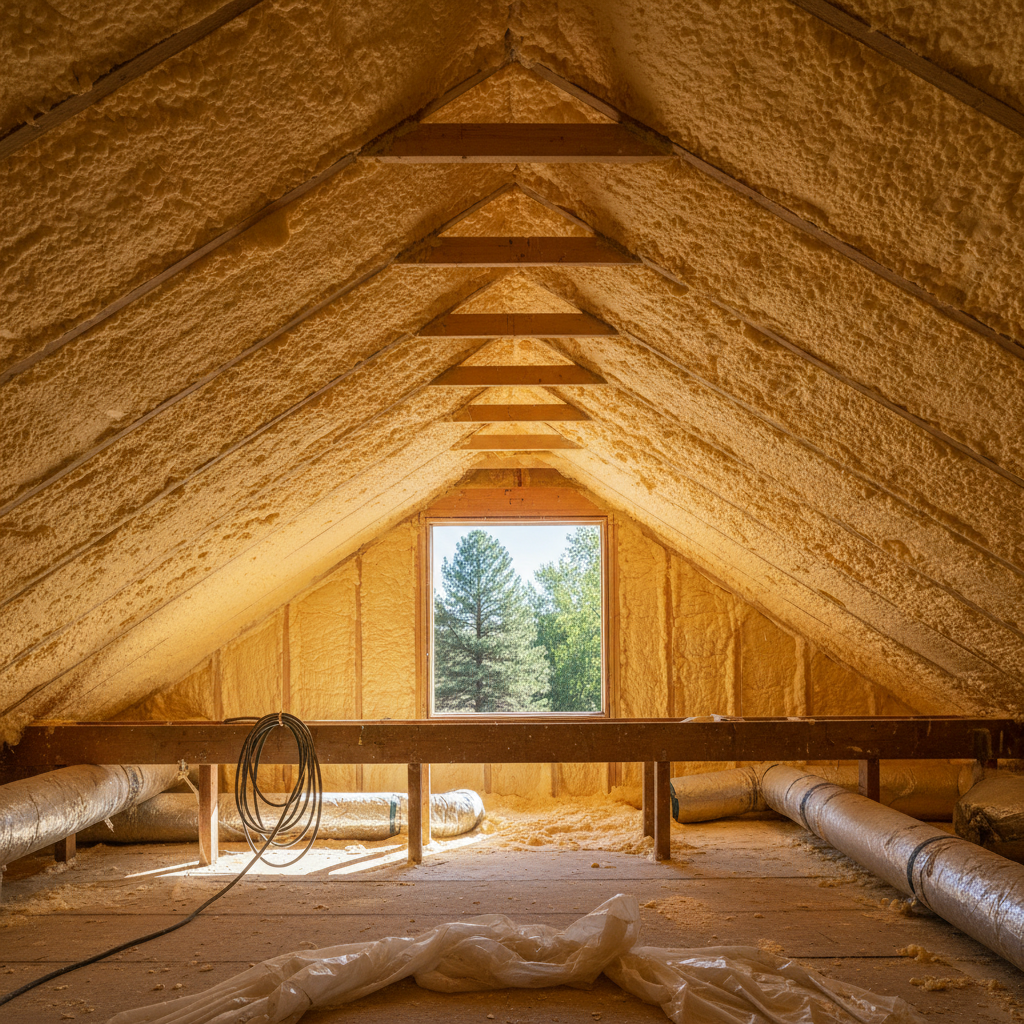
Living at nearly 7,000 feet means dealing with weather that is very harsh. If you have spent a single winter in the Ponderosa pines of Flagstaff, you already know how brutal the sub-zero nights can get, followed by intense UV exposure and rapid temperature swings during the summer months. When you are using closed cell spray foam to lock down your home envelope, timing and technique matter much more than people realize.
Flagstaff Spray Foam Insulation gets many questions about when it is safe to spray and how our unique mountain environment affects the chemical curing process. Flagstaff Spray Foam Insulation will break down what you actually need to know about working with closed cell foam around here.
The Climate Challenge for Closed Cell Foam
Closed cell spray foam is a very reliable choice for our region. Closed cell spray foam acts as an air barrier, a vapor retarder, and adds solid structural rigidity to framing. But the chemicals used to create that rigid, high-density matrix are sensitive to extreme temperatures during application.
Most professional-grade closed cell formulations require substrate and ambient temperatures to stay within specific manufacturer guidelines—typically above 50 degrees Fahrenheit for optimal expansion and adhesion. If the wood framing in your attic or crawl space is sitting near freezing, the foam will not rise properly, you will lose yield, and the bond can fail. That is a costly mistake on any home upgrade.
Timing Your Installation Around Mountain Seasons
Planning your project around Flagstaff weather patterns keeps everything running well and ensures your Closed Cell Spray Foam Insulation performs the way it is supposed to for 15 to 20 years or more.
- Late Spring to Early Fall: This is the golden window. Daytime temperatures are reliably mild, allowing substrates to warm up naturally.
- Monsoon Season (July and August): High humidity and sudden afternoon downpours can cause high moisture levels in exposed framing, making surface prep critical before any product touches the wall.
- Deep Winter: While Flagstaff Spray Foam Insulation can handle cold-weather jobs by using specialized equipment and heating the work zones, it requires extra setup to keep materials at the right temperature.
If you are planning a major remodel or a new build, try to lock in your Closed Cell Spray Foam Insulation phase before the first heavy snowfall shuts down easy site access.
Protecting Your Insulation Investment Year-Round
Once closed cell foam is cured, Closed Cell Spray Foam Insulation is remarkably tough. Closed cell foam will not sag, settle, or absorb moisture. However, there is one major enemy local homeowners need to keep in mind: UV rays.
If your closed cell foam is applied in an open area like a carport or an unvented attic space where sunlight hits it directly through a window or opening, that intense high-altitude sunshine will degrade the closed cell foam over time. Always make sure the closed cell foam gets covered by an approved thermal barrier or ignition barrier like latex paint or drywall, depending on the location.
Keep an eye on roof leaks or plumbing issues too. Even though closed cell foam resists water, letting a slow leak go unchecked in your framing will rot the surrounding wood even if the closed cell foam itself remains intact.
Managing your home comfort in northern Arizona takes a bit of strategy. By respecting the climate constraints and scheduling your Closed Cell Spray Foam Insulation installation when the weather cooperates, Flagstaff Spray Foam Insulation helps you keep your energy bills predictable all year long.