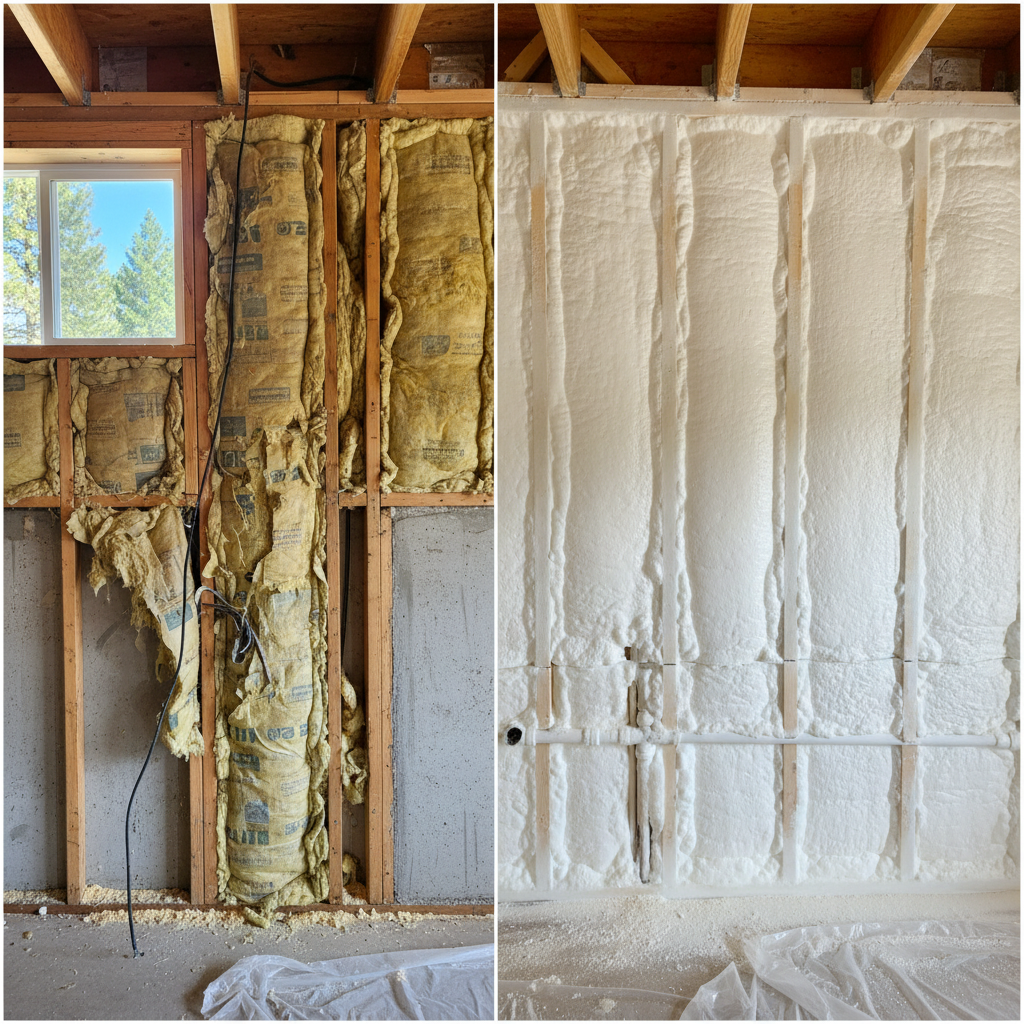
Alright, let's talk basements. Here in Flagstaff, whether you've got a full-on finished living space or just a utility room, insulating your basement walls is a smart move. It keeps the cold out, the warmth in, and can even help manage moisture. But when you look at how to do it, you're usually staring at a choice between rigid foam boards and spray foam. Let me walk you through what I've seen and what you need to know.
Rigid Foam Boards: The DIY-Friendly Option
Rigid foam boards, like XPS (extruded polystyrene) or polyisocyanurate, are pretty common for basement walls. They come in big sheets, usually 4x8 feet, and you cut 'em to fit. You typically fasten them to the concrete walls and then seal the seams with tape or caulk. Sometimes you'll build a stud wall in front of them and fill the cavities with batt insulation, but for a basic approach, it's just the boards.
- Cost: Upfront, the materials for foam boards can seem cheaper than spray foam, especially if you're doing the work yourself. You're buying the sheets, some adhesive, maybe some tape.
- Installation: This is where foam boards shine for the DIYer. You can cut them with a utility knife, fit them, and glue them up. It's not rocket science, but it does take time and precision to get a good, tight fit, particularly around pipes and wires.
- Durability & Maintenance: Once they're up and covered (which they usually need to be for fire code), they're pretty durable. They don't sag or settle. Maintenance is basically non-existent unless they get damaged.
- Appearance: You're not leaving these exposed. They'll need to be covered by drywall or another finish material to meet fire codes and look decent.
- Performance: They offer a good R-value per inch, and if installed perfectly, they create a decent thermal break. But here's the kicker: those seams. Every seam is a potential air leak. And if you've got an older Flagstaff home with a less-than-perfect foundation, getting those boards to sit flush and seal tight against uneven concrete can be a real headache.
Spray Foam Insulation: The Seamless Solution
Now, spray foam. This is what we do at Flagstaff Spray Foam Insulation, and for good reason, especially in basements. We're talking about a liquid foam that gets sprayed onto your walls, expands, and then hardens. There are two main types: open-cell and closed-cell. For basements, especially below-grade, closed-cell is usually the way to go because it's a vapor barrier and doesn't absorb water. Smart, right?
- Cost: Generally, spray foam has a higher upfront cost than foam boards. It's a specialized product that requires professional equipment and expertise to apply correctly. You're paying for the material, the labor, and the specialized knowledge.
- Installation: Definitely not a DIY job. You need trained pros with the right gear. But for us, it's quick. We come in, prep the area, spray, and we're usually out of there in a day or two depending on the size of your basement. The foam expands into every nook and cranny, creating a continuous, monolithic layer.
- Durability & Maintenance: Once cured, spray foam is incredibly durable. It adheres directly to the concrete, won't sag, settle, or degrade over time. It's also resistant to mold and pests. You won't have to touch it again.
- Appearance: Like foam boards, spray foam usually needs to be covered for fire safety. But before it's covered, it looks like a textured, hard foam layer. It's not meant to be decorative.
- Performance: This is where spray foam really shines. Closed-cell spray foam offers a higher R-value per inch than most foam boards. More importantly, it creates an airtight seal. There are no seams, no gaps, no places for cold air to sneak in or moisture to condense. It's also a vapor barrier, which is huge in basements where moisture can be a real issue. This means better comfort, lower energy bills, and a healthier basement environment.
My Take and Recommendation for Flagstaff Basements
Look, if you're on a super tight budget and you're really handy, foam boards can work. But you've got to be meticulous with sealing every single seam and penetration. If you've got an older home with a stone foundation or uneven concrete walls, getting those flat boards to seal perfectly is going to be a nightmare, and you'll end up with air leaks that defeat the purpose.
For most Flagstaff homeowners, especially with our cold winters and the potential for moisture in basements, I'm going to lean heavily towards spray foam. Yes, it costs more upfront. But the performance difference is night and day. You get a seamless, airtight, vapor-resistant barrier that will last the lifetime of your home. It's a set-it-and-forget-it solution that delivers superior comfort and energy savings. You won't be chasing down drafts or worrying about moisture behind your walls.
Think about it this way: you're insulating your basement once. Do you want to do it good, or do you want to do it cheap and maybe have to deal with issues down the road? For a critical area like a basement, especially in a place like Flagstaff where temperatures swing, investing in closed-cell spray foam is just a smarter long-term decision. It pays for itself in comfort and energy savings, and you get to stop worrying about your basement being cold or damp.