Why is attic insulation so important for Flagstaff homes, anyway?
Look, up here in Flagstaff, we get some wild temperature swings, right? Those cold, dry winters where it dips below zero, and then summers that can still hit the high 80s, especially in those older homes around the university or out by Fort Tuthill. Your attic is basically the buffer zone between your comfortable living space and that extreme outside air. Without good insulation, your heat in winter just shoots right up and out, and in summer, that scorching attic air bakes down into your house. It's like trying to keep a cooler cold with the lid open. Good insulation keeps your conditioned air inside, where you want it, saving you a ton on your energy bills and making your home feel way more consistent.
How do I know if my attic insulation is even good enough?
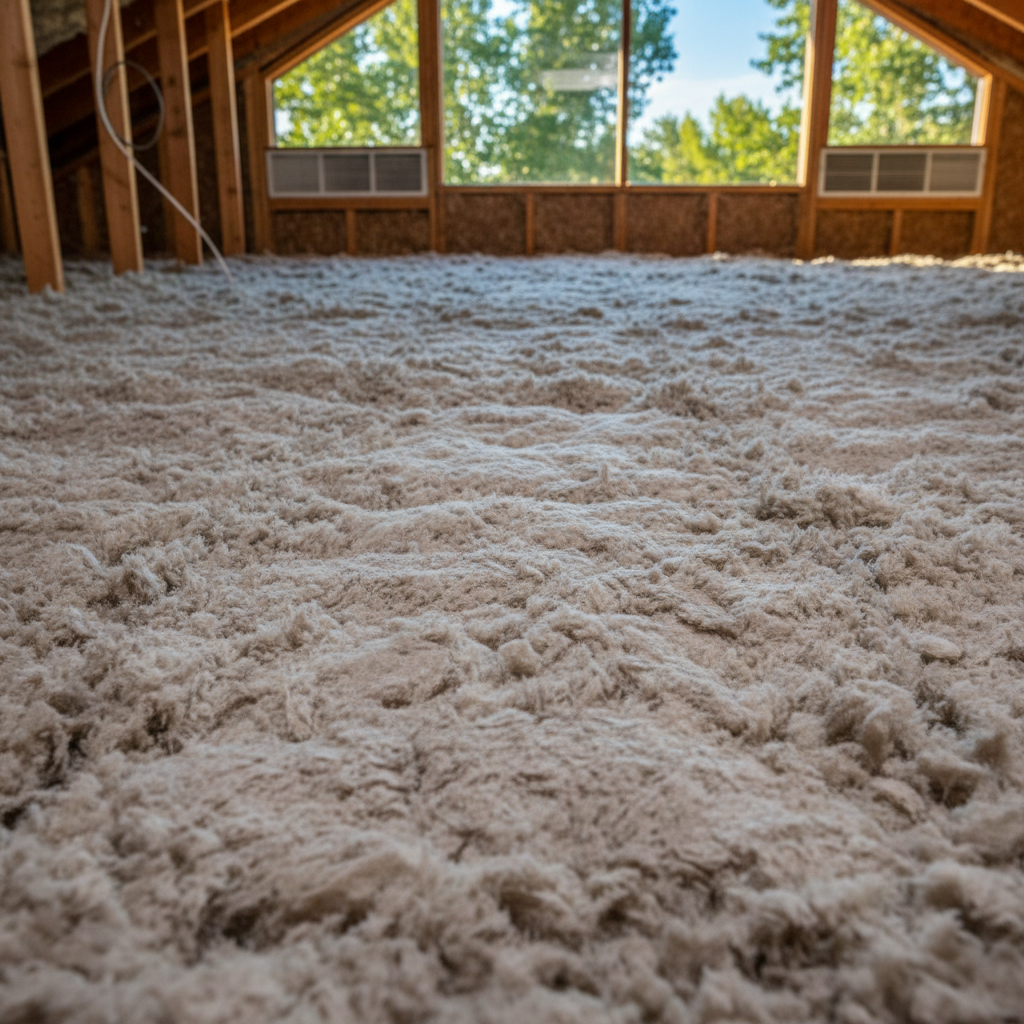
This is a question I get all the time. The easiest way to tell, without even getting up there, is how your house feels. Are there cold spots in winter? Does your AC run constantly in summer? Are your utility bills making your eyes water? If so, you probably need more. If you do get up in the attic, take a look. For loose-fill insulation (like blown-in cellulose or fiberglass), you want to see about 16-20 inches, sometimes more, especially if it's older and settled. That's roughly up to or above your floor joists. If you can see the tops of your joists, you're almost certainly under-insulated. If you've got old, matted-down fiberglass batts, those aren't doing much anymore either. Give us a call at Flagstaff Spray Foam Insulation, and we can do a proper inspection for you.
What's the deal with R-value? What R-value do I actually need in Flagstaff?
R-value is just a measure of thermal resistance – basically, how well a material stops heat from moving through it. Higher R-value means better insulation. For our climate zone here in Flagstaff (Zone 5), the Department of Energy recommends an R-value between R-49 and R-60 for attics. That's a pretty serious amount of insulation. Most older homes I see around here, especially those built before the 90s, are nowhere near that. They might have R-19 or R-30 if they're lucky. Getting up to that R-49 to R-60 range is where you'll see the biggest difference in comfort and savings.
Can I add new insulation over my old stuff, or do I have to remove it all?
In most cases, yes, you can absolutely add new insulation right over the old stuff. This is often the most cost-effective approach. As long as the existing insulation is dry, free of mold, and not infested with pests, it can actually contribute to your overall R-value. We'll typically blow new insulation right on top. The only times we recommend removal are if there's significant moisture damage, mold growth, animal droppings, or if the old material is just completely degraded and falling apart. We'll always assess that for you before we start any work.
What's the difference between blown-in and batt insulation? Which is better?
Okay, so batt insulation is those pre-cut rolls or sheets, usually fiberglass, that you lay down or fit between joists. Blown-in (or loose-fill) is insulation, often fiberglass or cellulose, that's blown into the attic space with a machine. For attics, especially ones with lots of irregular spaces, wires, or pipes, blown-in is generally superior. It creates a seamless blanket of insulation, filling all those nooks and crannies that batts just can't get into. Batts can leave gaps and air leaks if not installed perfectly, which defeats the purpose. Blown-in gives you a much better, more uniform coverage, which means better performance. For new construction, batts can be okay if done meticulously, but for existing attics, blown-in is usually the way to go for maximum effectiveness.
Will insulating my attic help with ice dams on my roof?
Absolutely, it's one of the biggest ways to prevent them. Ice dams form when heat from your attic melts snow on your roof, that water then runs down to the colder eaves, refreezes, and builds up. This can cause water to back up under your shingles and into your house. A well-insulated attic keeps that heat inside your living space and out of your attic, so your roof stays cold, and the snow melts evenly (or not at all) when the outside temperature rises. It's not just about insulation, though; you also need proper attic ventilation to ensure any heat that does get into the attic can escape. We always look at the whole system.
How long does attic insulation last, and when should I think about replacing it?
Good quality attic insulation, like blown-in fiberglass or cellulose, can last a very long time – we're talking 30, 50, even 80 years if it's undisturbed and stays dry. It doesn't really